Pinterest Free Traffic: The Source You May Be Overlooking
You probably wouldn’t put Pinterest at the top of your list if I asked you to name the best places to get free traffic.
YouTube? Probably. Facebook, TikTok, Instagram, maybe Reddit or Google?
But Pinterest?
For a lot of marketers, it’s still the place people go to save recipes, plan weddings, find decorating ideas, or decide what their next DIY project should look like.
And that may be exactly why so many people are overlooking it.
Behind all those recipes, decorating ideas, products, tutorials, and inspiration are people actively searching for things they want to discover, learn about, and sometimes buy. For anyone trying to generate traffic online, that’s worth paying attention to.
Pinterest Isn’t Quite Like Other Social Platforms
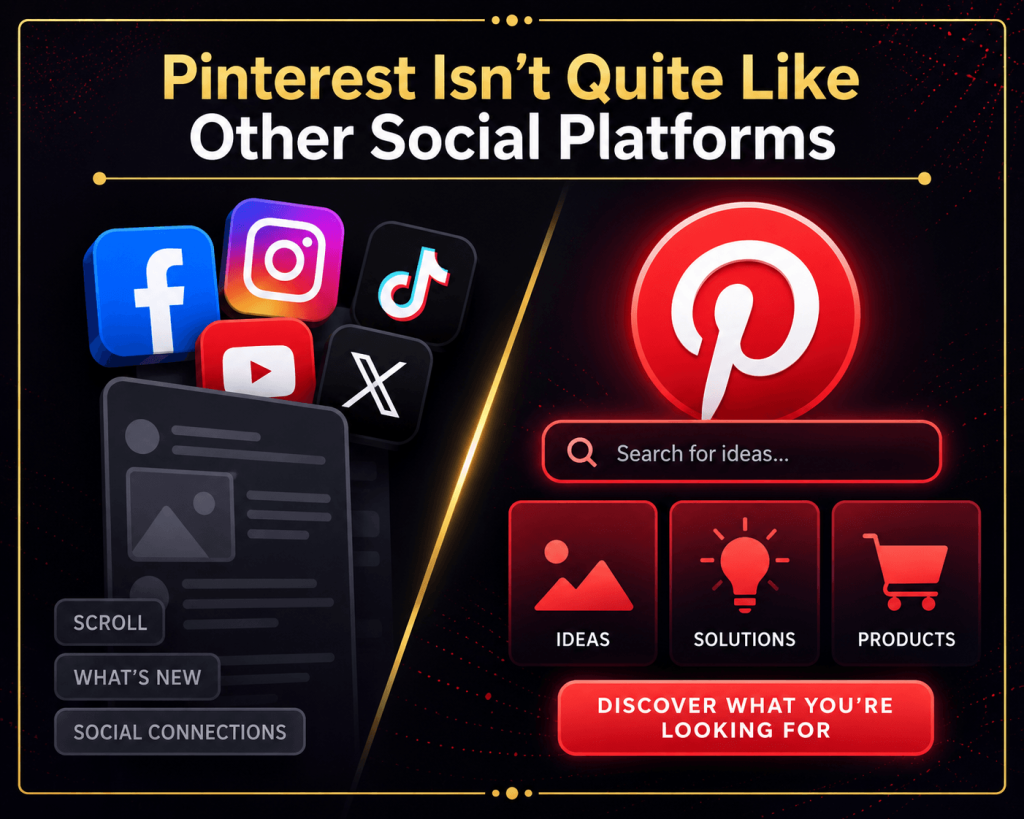
It’s easy to lump Pinterest together with Facebook, Instagram, TikTok, and other social platforms. After all, people create accounts, post content, follow others, and interact with what they find.
But Pinterest works differently in an important way.
A large part of the experience revolves around discovery. People go there looking for ideas, answers, inspiration, products, tutorials, recommendations, and solutions. They can type something into the search box or simply start browsing, and Pinterest helps them discover content related to their interests.
That makes it behave more like a visual discovery and search platform than the traditional social feed many marketers are accustomed to.
Think about someone who searches Pinterest for “small backyard landscaping ideas,” “easy meal prep recipes,” or “home office organization.” They’re giving you a pretty good indication of what they’re interested in at that moment.
That’s different from someone scrolling through Facebook or Instagram simply to see what happens to appear in their feed.
For a marketer, that distinction matters because you aren’t always trying to interrupt someone and convince them to become interested in your subject. You have an opportunity to create content around something they’ve already shown an interest in discovering.
Why Pinterest Traffic Is So Interesting
One of the frustrations with many free traffic methods is how quickly content can disappear.
You create a social post, publish it, and perhaps it gets some attention. Before long, newer posts replace it and you’re back to creating something else.
Pinterest content can work differently.
Pins can be discovered through searches, recommendations, related content, boards, and other areas of the platform. This gives useful Pins the opportunity to continue being found beyond the day they’re originally published.
That doesn’t mean every Pin you create will send traffic for months or years. There are no guarantees like that. But the possibility of creating content that can continue being discovered is one of the reasons Pinterest free traffic deserves attention.
There’s another important difference. You don’t necessarily need someone to already know who you are.
If your Pin matches something they’re looking for or something Pinterest believes they’re interested in, they may discover it without ever having followed you before. That’s an appealing possibility for someone who doesn’t already have thousands of followers waiting to see their next post.
Most importantly for marketers, Pinterest can send people somewhere else. A useful Pin can lead someone to a blog post, landing page, product page, lead-generation page, store, or another relevant resource.
The Pin isn’t necessarily the destination. It can be the reason someone discovers the destination in the first place.
How to Get Traffic From Pinterest
This is also where people can get Pinterest wrong.
It’s tempting to think the strategy is simply to create attractive images, put them on Pinterest, and wait for people to click. There’s a little more to it than that.
A useful way to think about Pinterest traffic is:
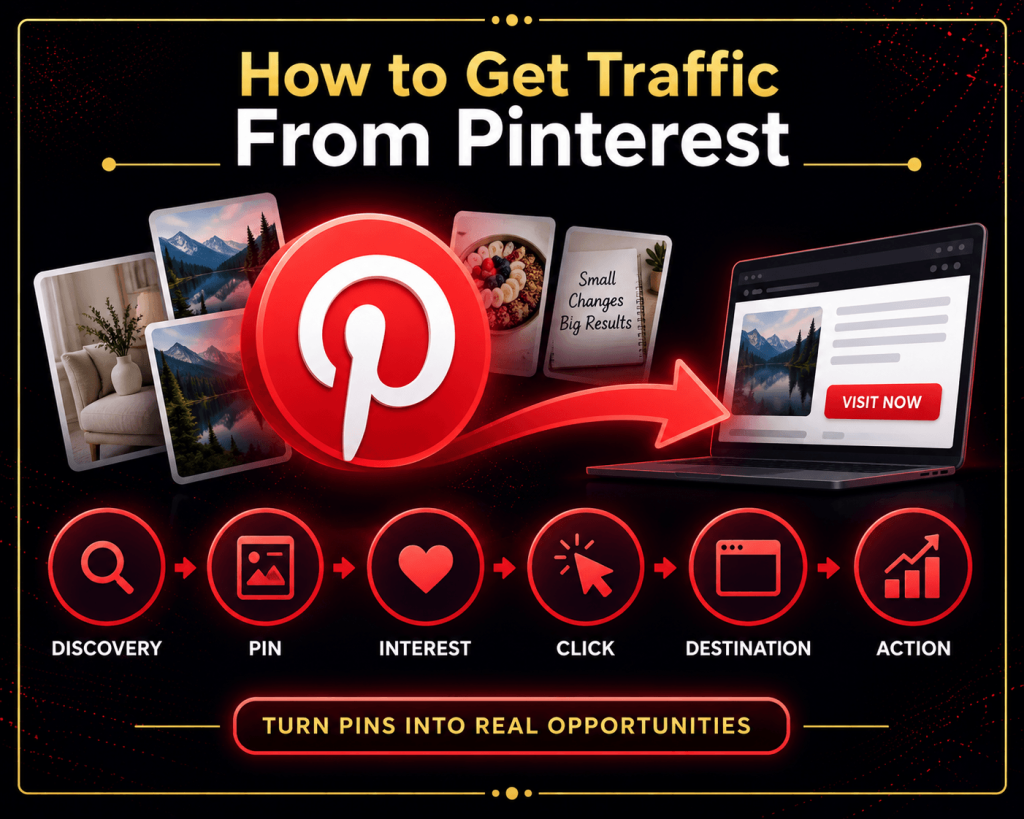
Discovery → Pin → Interest → Click → Destination → Action
Someone first has to discover the Pin, which means it helps to understand what your potential audience is interested in and what they’re searching for or exploring.
The Pin then needs to give them a reason to pay attention. The image certainly matters, but so does the message. Someone should have a reasonably clear idea of what they’re going to find if they click.
What happens after the click matters just as much.
Imagine discovering a Pin promising “7 Simple Ways to Organize a Small Kitchen.” You click it and land on a page that barely mentions kitchen organization and immediately tries to sell you something unrelated. Chances are you won’t stay very long.
The Pin technically generated traffic, but it wasn’t very useful traffic.
That’s why getting free Pinterest traffic isn’t simply about generating as many clicks as possible. There needs to be a logical connection between what someone discovers on Pinterest and what they find after leaving Pinterest.
The stronger that connection is, the better chance you have of turning a casual discovery into something meaningful.
Can You Use Pinterest for Affiliate Marketing?
This is where Pinterest gets particularly interesting for affiliate marketers.
Affiliate marketing is ultimately a matching business. You have a product or service that solves a particular problem, and you’re trying to get it in front of people who are likely to have that problem or want that outcome.
Pinterest can potentially become part of that process.
Suppose you’re promoting a product related to gardening. Instead of trying to find generic “affiliate marketing traffic,” you could create Pinterest content around the actual interests of the people who might want the product. That could include vegetable gardening, raised garden beds, growing tomatoes, gardening for beginners, or whatever subjects naturally connect the audience to the offer.
The same principle can apply to cooking, crafts, fitness, home improvement, travel, pets, personal finance, business, digital products, and many other subjects.
It’s About Matching the Right People With the Right Offer
The key is to think about the person interested in the subject of the offer, rather than thinking about them as someone you’re trying to make an affiliate commission from.
Of course, you’ll need to follow Pinterest’s current policies and properly disclose affiliate relationships when required. Platform rules can change, so it’s always worth checking the latest requirements before building a campaign around them.
But Pinterest for affiliate marketing can make a lot of sense when the offer, audience, Pin, and destination fit naturally together.
You don’t have to be an affiliate marketer to use the same basic idea, either. Someone selling their own digital or physical products can use Pinterest to help potential customers discover those products. Bloggers can use it to introduce people to their content, and list builders can use that content to bring interested visitors into a funnel.
The business models may be different, but the underlying principle remains the same. You’re helping people who are already interested in a subject discover something relevant to them.
Why Some Pinterest Marketing Efforts Go Nowhere
If Pinterest has this much potential, why doesn’t everyone who tries it get great results?
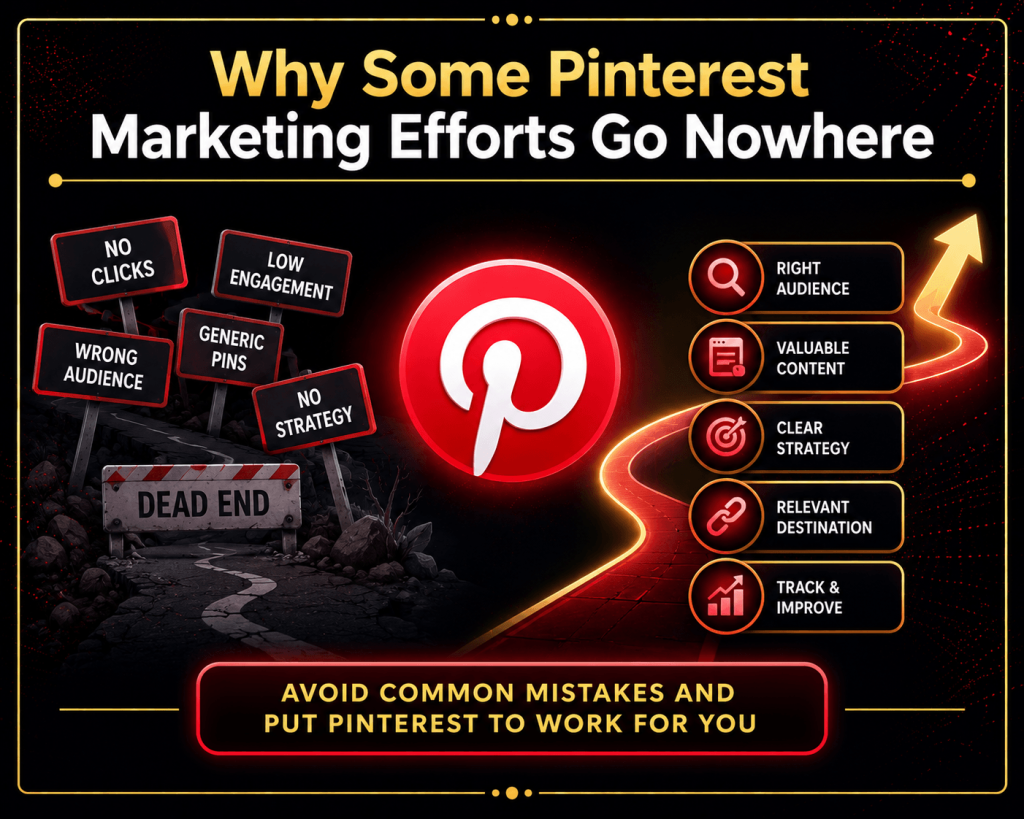
For the same reason people struggle with almost every other source of traffic. Posting content isn’t the same thing as having a strategy.
Someone may create a handful of Pins, choose topics without much research, link them to whatever page they’re trying to promote, see very little happen, and conclude that Pinterest doesn’t work.
Maybe Pinterest really isn’t a good fit for their particular market. But it’s also possible the problem is somewhere else in the process. The topic may not match what people are looking for, the Pin may not attract attention, or the destination may not deliver what the visitor expected when they clicked.
This is where having an actual Pinterest traffic strategy becomes important.
Instead of judging Pinterest by whether a few Pins immediately produce sales, you can start paying attention to what people are discovering, which Pins generate clicks, what subjects attract interest, and whether those visitors are doing anything useful after they arrive at the destination.
Over time, those results can tell you what deserves more attention and what probably needs to change. You’re no longer simply uploading images and hoping something happens. You’re learning from what people actually respond to and improving from there.
Is Pinterest Right for Everyone?
Probably not.
That’s worth saying because it’s easy to turn any traffic source into the next big thing once you start talking about its advantages.
Some niches are naturally more visual and discovery-oriented than others. Some offers are going to fit Pinterest much better than others. And some marketers simply won’t enjoy creating the type of content that performs well there.
Pinterest also isn’t instant traffic on demand. You’ll still need to research, create Pins, test ideas, learn what your audience responds to, and give the process enough time to produce useful information.
But “not right for everyone” is very different from “not worth looking at.”
If you’ve been trying to figure out how to get traffic from Pinterest, or you’re simply searching for another free traffic source that doesn’t depend entirely on building a huge social following, I think Pinterest deserves a closer look.
And that’s what recently led me to something interesting.
Taking the Next Step With Pinterest Traffic
Understanding the potential of Pinterest is one thing. Turning it into a traffic source you can actually use is another.
There are several pieces that need to work together, from choosing the right market and understanding what people are searching for to creating Pins that attract attention, sending visitors to the right destination, and tracking the results. This is where having a proven process to follow can make things considerably easier.
And if you’re thinking about actually putting it to work, there’s something you’ll probably want to see.
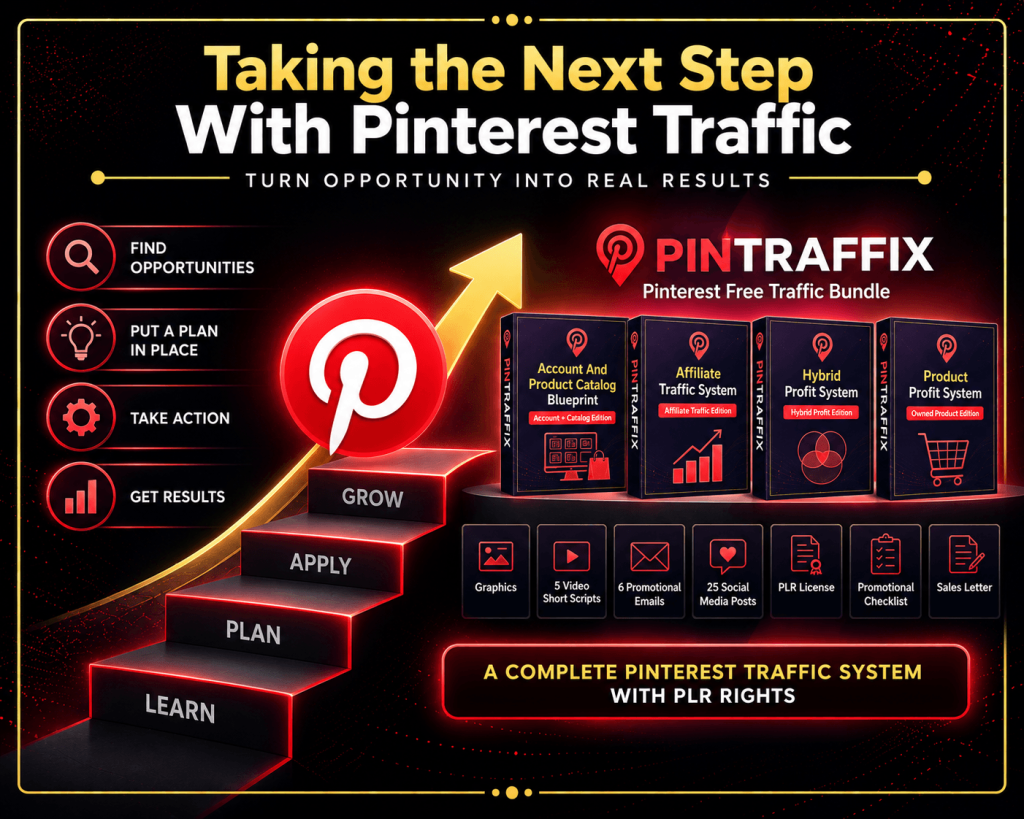
It’s called PinTraffix.
PinTraffix was created specifically around turning Pinterest discovery into traffic, whether you’re promoting affiliate offers, selling your own products, or doing a little of both.
But that’s only part of why I think it’s worth taking a look at.
What surprised me is just how much is actually included. PinTraffix isn’t built around one way of using Pinterest. There are separate systems for affiliate traffic, selling your own products, combining different income streams, and even setting up the account and product side correctly.
And that’s still not everything.
There’s another part of this package that completely changes what you’re getting.
PinTraffix comes with PLR rights.
So you’re not only getting a Pinterest traffic system you can put to work for yourself. You’re getting something you can potentially customize, rebrand, and turn into a product of your own.
And they’ve included quite a bit more to help you do exactly that.
I’m deliberately not going to walk you through everything here.
👉 Go take a look at PinTraffix for yourself
If Pinterest is a traffic source you’ve been overlooking, I think you’ll understand pretty quickly why this caught my attention.