The 7 Hidden Reasons Your Affiliate Traffic Isn’t Converting
Few things are more frustrating in affiliate marketing than seeing people click your links while your commissions stay at zero.
At first, everything looks promising. You create content, share affiliate links, send emails, or publish videos, and people start responding. Visitors arrive, clicks begin appearing, and it finally feels like your efforts are gaining traction.
Then you check your affiliate dashboard. Nothing. No sales.
This is often the point where affiliate marketers assume they need more traffic. The thinking seems logical. If a few hundred clicks didn’t produce results, maybe a few thousand will.
Sometimes that’s true. More often, it isn’t.
Traffic is only one piece of the equation. A visitor can click an affiliate link and still decide not to buy for dozens of different reasons.
The good news is that most of those reasons can be identified and improved once you know where to look.
In this article, we’ll examine the seven most common reasons affiliate marketers get clicks but struggle to generate sales, along with practical ways to fix each one.
Why Am I Getting Clicks but No Sales?
If you’re experiencing affiliate clicks but no sales, the most common causes are:
- You’re attracting the wrong audience.
- Your offer doesn’t match what visitors are looking for.
- Your landing page isn’t converting.
- Visitors don’t trust you yet.
- Your follow-up process is weak.
- Your call-to-action isn’t compelling.
- You aren’t tracking what’s actually working.
Let’s look at each of these reasons in more detail.
What A Click Really Means and What It Doesn’t
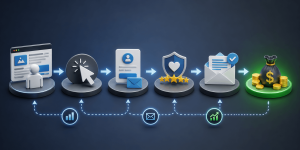
Getting clicks is a positive sign.
It means your content, email, ad, video, or recommendation was compelling enough to get someone’s attention. People saw what you shared and wanted to learn more.
What a click does not tell you is why someone ultimately decided not to buy.
That’s why clicks can sometimes be misleading. They show interest, but they don’t reveal what happens afterward.
The purpose of this article is not to help you get more clicks. It’s to help you understand why those clicks are not turning into commissions so you can focus on fixing the real problem.
Reason #1: You’re Sending the Wrong Traffic
 One of the most common reasons affiliate marketers struggle to make sales is that they’re attracting the wrong type of visitor.
At first, traffic feels like traffic. If people are clicking your links, it seems logical that sales should follow. The problem is that not every visitor arrives with the same intent.
Consider the difference between someone searching Google for “best email marketing software” and someone casually scrolling Facebook who clicks a post about email marketing.
Both may visit the same page. Both count as a click. But they are in very different stages of the buying process.
The person searching Google is actively looking for a solution. They may already be comparing products and deciding which one to buy. The Facebook visitor may simply be curious and looking for information.
This is why some traffic converts better than others.
In general, visitors fall into a few categories. Some are buyers who are actively searching for a solution. Others are researching options before making a decision. Some are simply curious, while others are only interested in finding free resources.
The challenge is that all of these people can generate clicks, but only some are likely to generate sales.
If you’re getting plenty of clicks but very few commissions, take a closer look at where your traffic is coming from. The issue may not be the amount of traffic you’re generating. It may be the quality of that traffic.
A good place to start is by creating more content around buying decisions. Reviews, comparisons, tutorials, and solution-focused content often attract visitors who are much closer to making a purchase than general interest content.
The goal is not simply to attract more visitors. The goal is to attract visitors who are already looking for the type of solution you’re recommending.
Reason #2: The Offer Doesn’t Match the Audience
Sometimes the traffic is not the problem.
People may be genuinely interested in your content and willing to learn more. The problem is that the offer itself is not a good fit for the audience seeing it.
This happens all the time in affiliate marketing. A product can be excellent and still struggle to generate sales if it is presented to the wrong people. An advanced marketing tool may overwhelm beginners, while a high-ticket coaching program may not appeal to an audience looking for free or low-cost solutions.
In other cases, the offer simply solves a different problem than the one the visitor is trying to fix. Someone searching for ways to get more website traffic may not be interested in an email marketing course, even if the course is excellent. Their attention is focused elsewhere.
When there is a disconnect between the audience and the offer, the results can be confusing. You may see plenty of clicks and engagement, but very few sales.
If this sounds familiar, take a closer look at the people consuming your content. What problem are they trying to solve right now? What outcome are they hoping to achieve?
The best affiliate offers feel like a natural next step because they directly address the problem the reader already has in mind. When the offer and the audience are aligned, conversions tend to improve because the recommendation simply makes sense.
Reason #3: Your Landing Page Is Killing Conversions
 Sometimes the issue isn’t the traffic or the offer. It’s the page visitors see after they click. If the page feels confusing, overwhelming, or unclear, many visitors leave before taking the next step.
A weak headline can fail to communicate the main benefit. Confusing messaging can make visitors unsure about what is being offered. Too much information can overwhelm people before they have a chance to understand why they should care. Poor design can make a page feel unprofessional, while a lack of clarity can leave visitors wondering what action they should take next.
The result is usually the same. People leave without taking the next step.
If you’re seeing visitors arrive but very few opt-ins or conversions, your landing page deserves a closer look. If you’ve been wondering why affiliate links aren’t converting, the answer is not always the offer itself. Sometimes the page visitors land on is creating enough confusion or friction to stop them from moving forward. High bounce rates and low engagement are often signs that the page is creating friction somewhere in the process.
The good news is that landing page problems are often easier to fix than traffic problems.
Start by simplifying your message. Make sure the headline clearly communicates what the visitor will gain. Remove unnecessary distractions and focus on one primary action. The easier it is for visitors to understand what you want them to do, the more likely they are to do it.
Many affiliate marketers spend months looking for better traffic when a few simple improvements to their landing page could have produced better results much faster.
Reason #4: People Don’t Trust You Yet
 Trust plays a much bigger role in affiliate marketing than many people realize.
Most people do not buy a product simply because they clicked a link. Before spending money, they want some level of confidence that the product works and that the recommendation is worth listening to.
That is why recommendations often convert better than direct promotions. When people trust the person making the recommendation, the buying decision becomes much easier.
The challenge is that many affiliate marketers are working with cold traffic. The visitor may be seeing them for the first time. There is no relationship yet, which means trust is still being built.
In that situation, even a good offer can struggle to convert.
If you’re getting clicks but very few purchases, trust may be part of the problem. This is especially common when you’re promoting products to a new audience or establishing yourself in a niche.
The good news is that trust can be built. Reviews, case studies, personal experiences, and useful content can all help visitors feel more confident in your recommendations. Building an email list can also help because it gives you the opportunity to develop a relationship over time rather than relying on a single interaction.
The more trust you build, the easier it becomes to turn interested visitors into customers.
Reason #5: Your Follow-Up Process Is Weak
Most people do not buy immediately after clicking an affiliate link. They often need time to research the product, compare alternatives, and decide whether it’s the right solution for their needs.
This is why follow-up matters so much.
Many affiliates focus heavily on generating clicks but spend very little time nurturing the people who click. As a result, potential buyers lose interest and move on before a relationship has a chance to develop.
If you’re building an email list, your follow-up sequence becomes one of your most valuable assets. It gives you the opportunity to answer questions, build trust, overcome objections, and stay connected with prospects after their first visit.
A common sign of this problem is seeing good opt-in rates but very few sales. You may be generating leads consistently, yet those leads never become customers.
The solution is not necessarily sending more emails. It is sending more helpful emails. Focus on providing value, sharing examples, and addressing the questions people typically have before making a purchase.
Many sales happen days or even weeks after the first click, which is why a strong follow-up process can often have a bigger impact than simply generating more traffic.
Reason #6: Your Call-To-Action Isn’t Strong Enough
Sometimes visitors read your content, understand the offer, and seem interested in what you’re recommending, yet they never take the next step.
When this happens, the problem may be your call to action.
Many affiliate marketers treat the call to action as an afterthought, but it plays an important role in moving people from interest to action. If the next step feels unclear or unimportant, visitors often leave without doing anything.
Consider the difference between a button that says “Learn More” and one that says “Watch The Free Training Now.” Both encourage a click, but the second gives visitors a much clearer idea of what they will receive.
Strong calls to action provide clarity and communicate a benefit. They help visitors understand why taking the next step is worth their time.
If people are reading your content but rarely clicking through, take a closer look at how you’re presenting the next action. Often, small changes in wording can make a noticeable difference in results.
Reason #7: You Have No Idea What’s Actually Working
 This is where many affiliate marketers discover the real problem.
Up until now, we’ve looked at several possible reasons why clicks fail to become sales. The challenge is that many marketers have no way of knowing which of those reasons is actually affecting their business.
Most affiliate marketers can see traffic, clicks, and activity. What they often cannot see is which traffic sources, emails, pages, and campaigns are actually generating sales.
As a result, they start guessing.
Many people dealing with affiliate marketing and no sales assume they need a different product, more traffic, or a new strategy. In reality, they often lack the data needed to identify what is actually happening after the click.
They make changes based on assumptions and try random fixes. Or they switch offers, rewrite content, change traffic sources, and test new ideas without ever knowing whether they are solving the real problem.
This approach can become expensive very quickly.
Time gets wasted on activities that are not producing results. Money gets invested into campaigns that are not profitable. Opportunities are missed because winning traffic sources and successful campaigns go unnoticed.
If you’re not completely sure where your sales are coming from or why certain campaigns perform better than others, there is a good chance this is affecting your business.
The solution begins with understanding what happens after the click.
Once you can see the path visitors are taking and identify which actions are producing revenue, decision making becomes much easier.
How To Stop Guessing and Start Finding Winners
 At some point, most affiliate marketers realize the problem is not effort. The problem is visibility. They simply do not know which traffic sources, campaigns, pages, or links are actually producing results.
This is where conversion tracking becomes valuable.
When you can see what is working, you can stop making decisions based on assumptions and start focusing on the activities that are already generating revenue.
A Tool That Makes This Much Easier
WP Conversion Tracker was designed to answer one of the biggest questions affiliate marketers face:
“What’s actually making me money?”
Instead of guessing which traffic sources are producing buyers, which emails are generating commissions, or which campaigns deserve more attention, you can see what is working and make smarter decisions based on real data.
WP Conversion Tracker can also automatically add buyers to your autoresponder and tag them based on the exact offer they purchased.
That means you can build a list of proven buyers, automatically deliver bonuses, follow up with related offers, and continue marketing to customers long after the initial sale.
Instead of a one-time commission, every buyer becomes a long-term asset for your business.
Even better, when you pick up WP Conversion Tracker through my link, you’ll also receive my complete Conversion Optimization Bonus Bundle.
These 6 bonuses were created to help you do more than track your results. They’ll help you understand them.
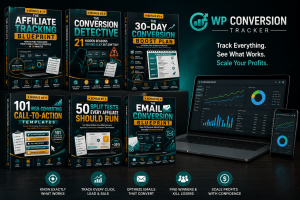
You’ll discover how to identify your most profitable traffic sources, uncover hidden conversion problems, improve your calls to action, increase email conversions, run smarter split tests, and build a step-by-step plan for improving your results over the next 30 days.
In other words, you’ll not only know what’s working. You’ll know exactly what to do with that information once you find it.
👉 Find What’s Broken, Track What’s Working, and Improve Your Results Here
Frequently Asked Questions
Why am I getting affiliate clicks but no sales?
The most common reasons include poor traffic quality, offer mismatch, weak landing pages, lack of trust, poor follow-up, weak calls to action, or not tracking where conversions are breaking down.
Why is my affiliate traffic not converting?
Visitors may be interested enough to click but not convinced enough to buy. This often points to issues with trust, targeting, the offer, or the customer journey after the click.
Why aren’t my affiliate links converting?
Affiliate links often fail to convert because the offer doesn’t match the audience, the landing page creates friction, or visitors need more information before making a decision.
How much traffic should it take to make an affiliate sale?
There is no universal number because conversion rates vary by niche, traffic source, offer quality, and audience intent.
What is a good affiliate conversion rate?
Many affiliate offers convert between 1% and 5%, although some perform significantly better when the audience is highly targeted.
Final Thoughts
If there is one thing to remember from this article, it is that getting clicks is not the goal. Getting sales is.
The challenge is that many affiliate marketers never discover where the conversion process is breaking down. They try different traffic sources, promote different offers, and make changes based on guesswork rather than data.
The affiliates who consistently grow their income take a different approach. They identify what is working, measure their results, and focus on the activities that generate revenue.
If you are tired of wondering why your clicks are not turning into commissions, WP Conversion Tracker can help you uncover what is actually happening after the click. Once you have that information, it becomes much easier to make smarter decisions, improve your conversions, and grow your affiliate business with confidence.
👉 Click Here to Learn More About WP Conversion Tracker + My Bonuses